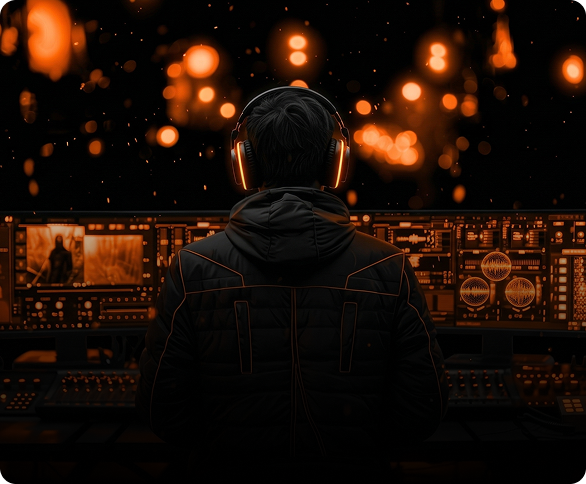
OpenAI's video model is not just another tool. It is a fundamental shift in how brands brief, produce, and distribute moving image content.
When Iteration Becomes Free
The landscape of video production is changing faster than most studios can adapt. What took a crew, location, and week of planning can now be conceived, generated, refined, and delivered in days.
For brands, the shift is not only speed. It is the ability to test many visual directions without rebuilding the entire production plan.
"The question is no longer what you can afford to make. It is what you have the courage to imagine."
What Sora Actually Changed
Previous text-to-video tools were impressive in isolation but fragile under production pressure. Sora changes the conversation by making visual continuity, motion, and prompt control more useful for commercial workflows.
The model is not replacing directors, editors, or strategists. It is compressing the distance between idea and proof.
The Human Layer That Still Matters
AI has not removed the need for craft. Creative direction, sound design, color grading, pacing, and editorial rhythm still decide whether the final piece feels premium.
- Creative direction keeps the story coherent.
- Color grading gives AI output a finished register.
- Editorial rhythm turns generated footage into a campaign asset.
Author
Zara Malik
Creative strategist at TFD, focused on AI capability, content systems, and human craft in visual storytelling.